In my previous post, I wrote about why I don’t feel connected with the language of surrender. Here, I continue through one image that continues to inspire me: the ocean.
We use words in our day to day, and we may forget that they are ultimately just images, especially when we use them to talk about our lived experiences. Some of such experiences happen at such deep levels that to give them names is always some sort of injustice. But we are used to these names, and they are useful. They have the purpose to help us share what we live, and to connect to one another.
But there are risks. Words can prevent us from entering an experience, they can scare us, misguide us. They can also give the experience a flavor. Michael Pollan makes an interesting point about Aldous Huxley: when Huxley wrote about his mescaline trip in The Doors of Perception, he did not only describe what happened to him. He gave future generations of psychonauts a language to live by, affecting the experiences of everyone after him.1
Personally I never felt connected to surrender because I don’t see my work as a power dynamic. In fact, removing the layers of a lost fight has taken (and still does today) tremendous effort. And so I continue to think about the meaning of what I do.
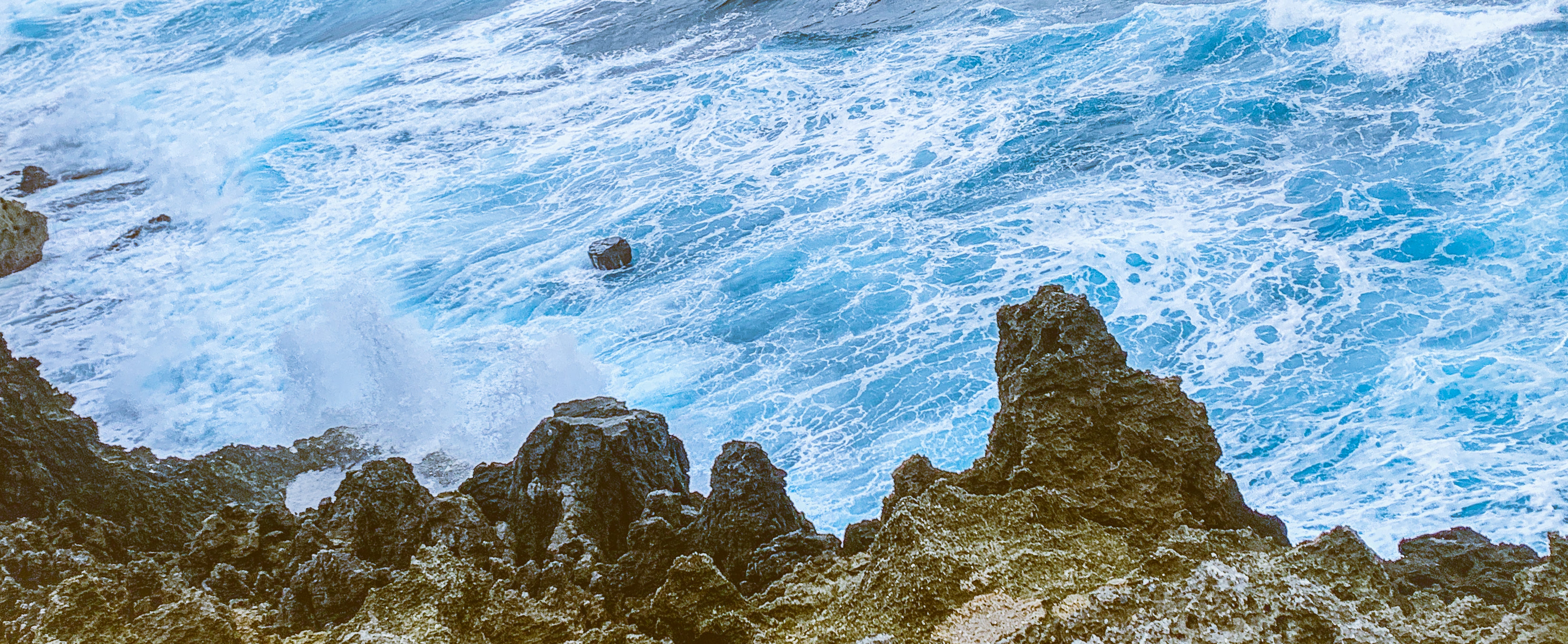
One of the images from my previous post that resonates heavily with how I feel is the ocean. A friend of mine once described a sensation of profound bliss he had while swimming, where he felt the sparkling foam, the overwhelming blue and white colors, the floating of his weightless body, the movement along the swaying of the tide.
There is a sense of disappearance, but especially there is a sense of participation. The connection to a larger entity. The palpable feeling of the world holding us. I think it is a powerful image. Romain Rolland refers to the “boundless sensation of eternity”, which discusses with his friend Freud. Later on, Freud goes as far as to say that this is at the root of all mysticism. They call it Oceanic Feeling.
It connects to a mythic image of primordial waters. It appears in many cultures. From Nun in Egypt, to Tiamat in Mesopotamia. In Shinto, Izanagi and Izanami make the first island of the world to emerge from water.
Going to the ocean is then going back. A state where our individuality hasn’t emerged yet. A state without language. A state of communion.
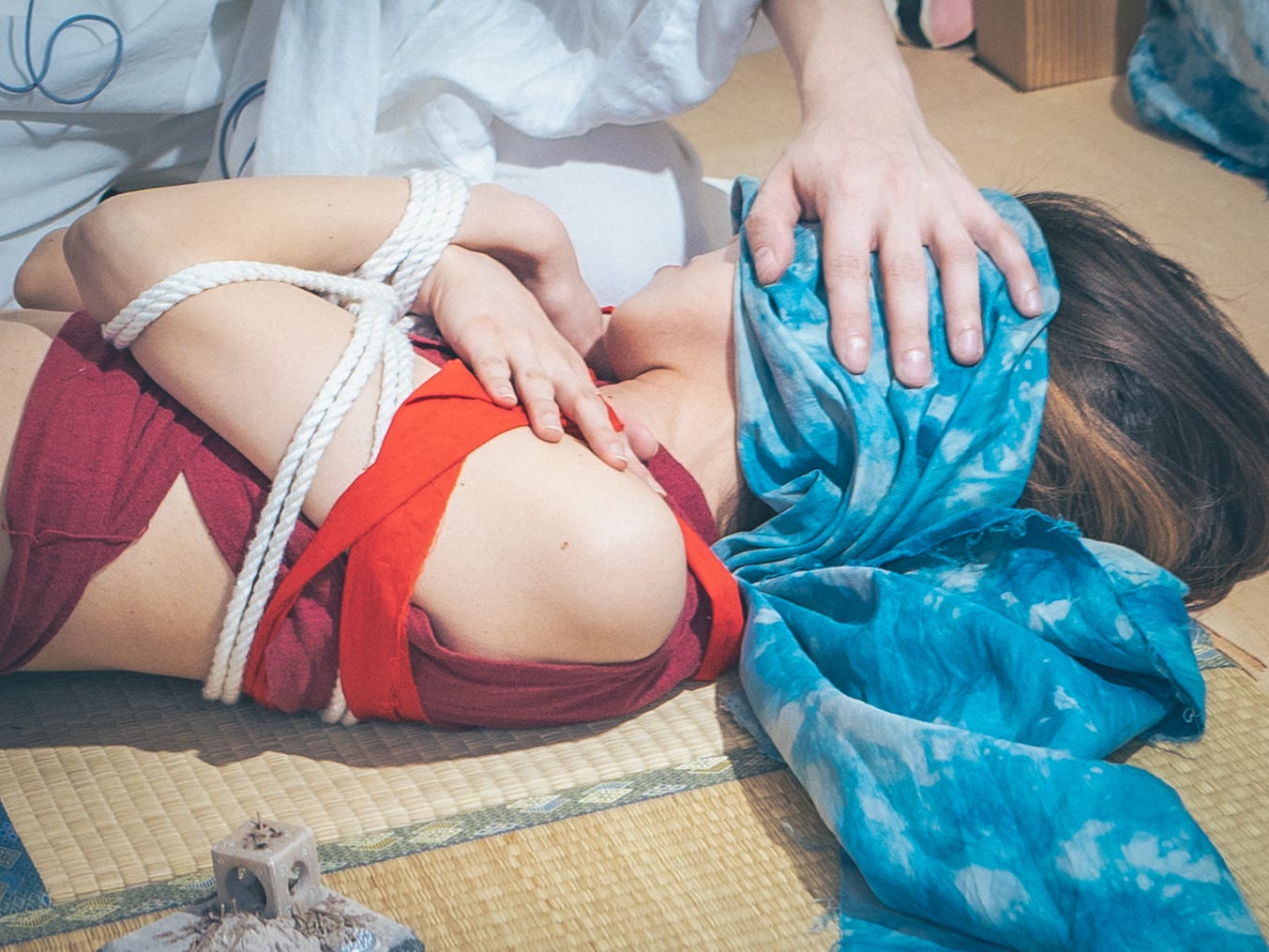
But perhaps this is too easy. At the end of the day, if people speak of surrender is because there is some sort of violence involved, at least, a hardship. To ignore that completely would be another type of alienation. The ocean is not just peaceful and inviting.
Looking at the shore on a stormy night, furious waves crash against the cliff, we feel powerless and completely at the mercy of something deeply inhuman. To go back to a state before individuality can be scary, disarming, violent. There is a narrative of death and dissolution. This is where surrender begins to make sense.
Which is to say that words are powerful but they have a limit. Our narratives can ease the experience, but ultimately there is a threshold that one way or another must be crossed.
Here I am only trying to describe the gate I cross, in the hope that you may recognize your own.
If you do not surrender, would you jump into the ocean?
Thank you for reading Rope Meditations.
Pablo Aida
In the following entries I will continue around these questions: the image of water, the distance not between us and the world but between us and another person, and the kind of boundary that allows us to cross a threshold without disappearing. Subscribe to Rope Meditations if you would like to explore these with me.
As described in How to Change Your Mind