Today was a remarkable day as we visited the Taima museum (hemp museum) in Nasu, a small town in the prefecture of Tochigi, about 80 km to the north of Tokyo.
Hemp is an essential element in Japanese culture, used traditionally to make ropes, particularly in Shrines. Convinced I am of the power of the ropes, we came this way to find its religious and historic origin. In this post a share a few quick notes on today's ideas, sketching some lines for future research.
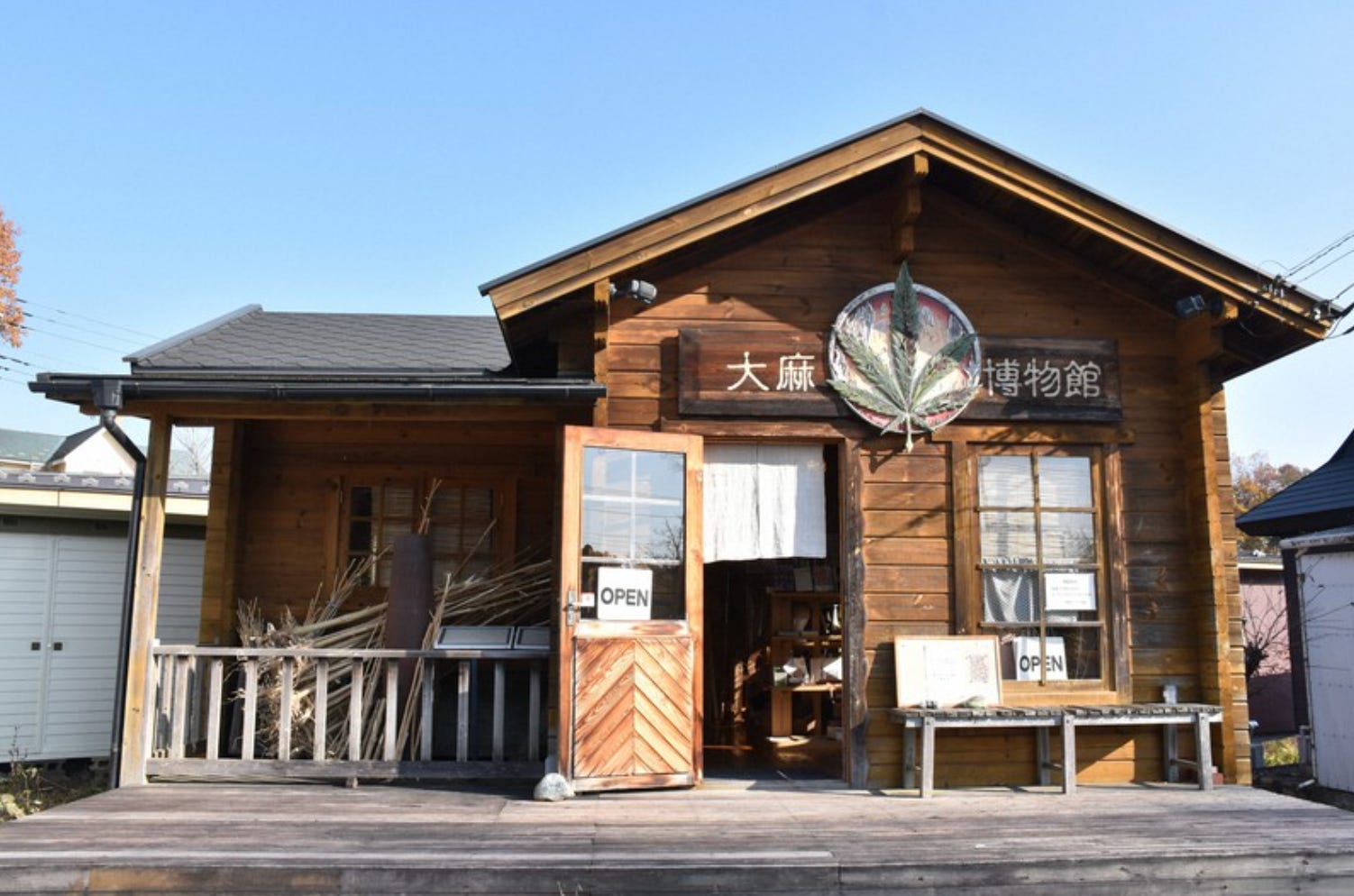
Tochigi produces about 90 per cent of the Japanese commercial hemp [source]. There, Junichi Takayasu opened a small museum in the early 2000s, packed with knowledge and the history of the region with regards to this emblematic plant. I came with my family, invited by Manami Okazaki, a Japanese Folk and Subculture specialized journalist friend of mine, with who I have been discussing this topic passionately in the past few weeks.
We had the privilege to spend the morning with Takayasu-san, as he shared his thoughts, notes, and materials on this fascinating topic. I told him I was a Shibari artist interested in the use of hemp for the fiber and also its religious connotations in Shintoism. An interest driven by the concept of the ropes themselves, and the role they play in Japanese culture, starting from the Jomon Period (prehistory), that literally translates to the culture of the ropes.
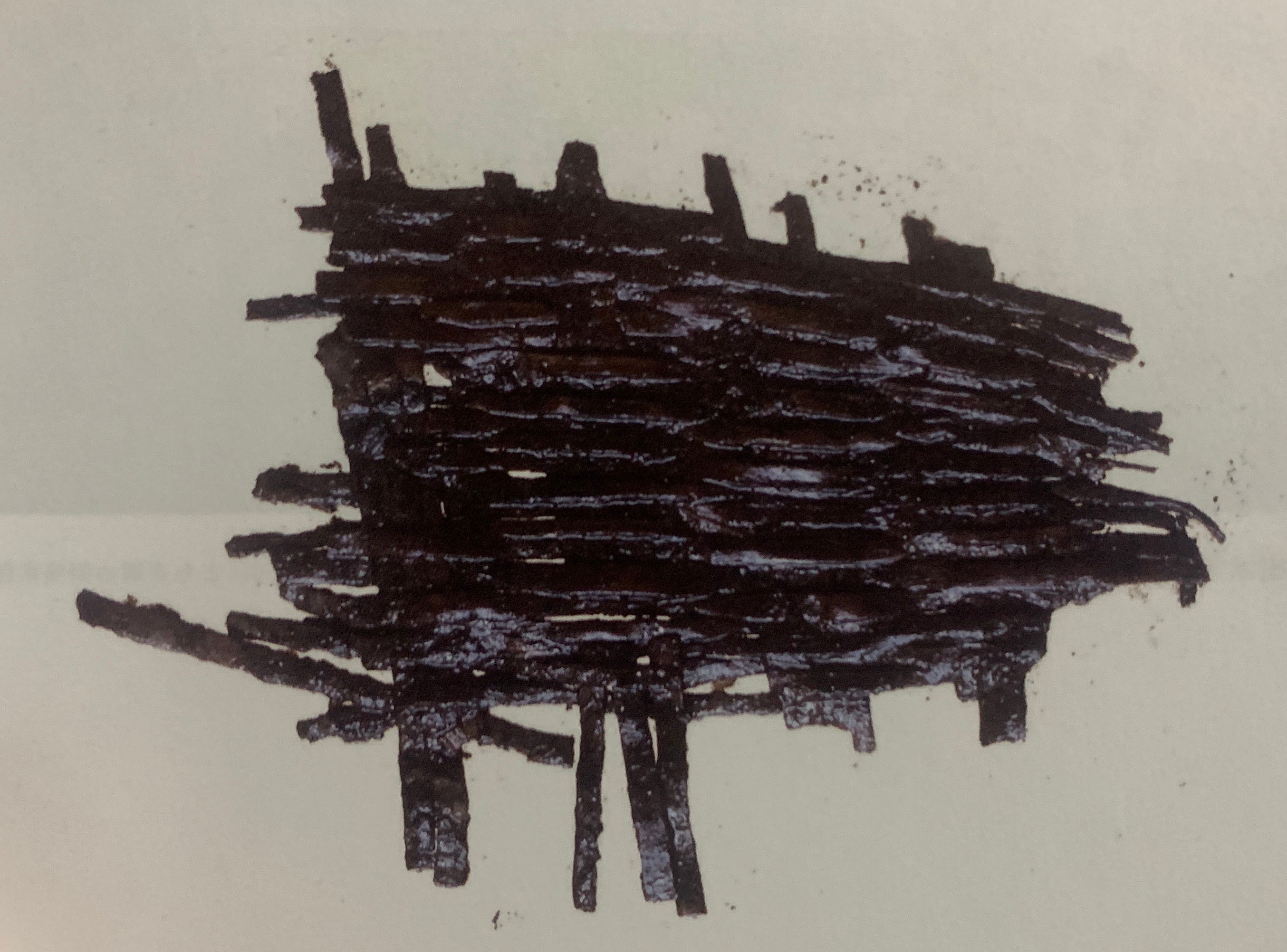
We talked about the meaning and fabrication of Shimenawa. We talked about fibers, threads, and fibers, about craftsmanship. We talked about religion and identity. We talked about history and drug policies. It was a really dense conversation packed with information and anecdotes. At the end I was also able to purchase a piece of 8 meters handmade hemp rope. The artisan, who cultivates the hemp herself, is an old lady whose identity is kept secret for the protection of her products and herself. A story that turns at times into a thriller.
Here are a few impressions and ideas, by no means exhaustive:
Hemp (most likely) came to Japan from Tibet around 18000 years ago. Its cultivation began 6000 years ago during the Jomon period [source].
Cultivation of hemp (whether or not it contains THC, its main psychoactive component) became regularized in the 50s, and since then its production has been drastically decreasing. Before, the distinction of the types based on the THC level was irrelevant. There is no clear documented use of cannabis in Shintoism for its mind altering effect.
Nowadays, Shimenawa ropes (the ceremonial thick ropes used in shrines) are made mostly of rice rather than hemp, because of the lack of materials and artisans that have the means, knowledge, or license to produce it. Very few people produce hemp threads in Japan, and there is literally nobody who produces hemp fabric commercially, as far as Takayasu-san is aware of.
Purification is an essential aspect of Shinto religion, and hemp has a purifying character that is only second to salt. It is important to get in contact physically with hemp before getting close to the divine. This means that although Shimenawa ropes are not necessarily made of hemp, other elements are: the cords to pull the bells in the altars, the wands used to cleanse the air, the lace around the talismans, or the rope that priests put on their heads during ceremonies. All these objects are meant to be touched.
Rope making was a very common skill before the Showa period, so much that was often delegated to children or left to do while partaking in other mind wandering activities.
When we use the term 麻縄 (asanawa), most people refer actually to jute, specially in the context of Shibari. The kanji 麻 refers to many different plants such as jute, linen, or hemp. The word hemp is 大麻 (taima). 大 means big.
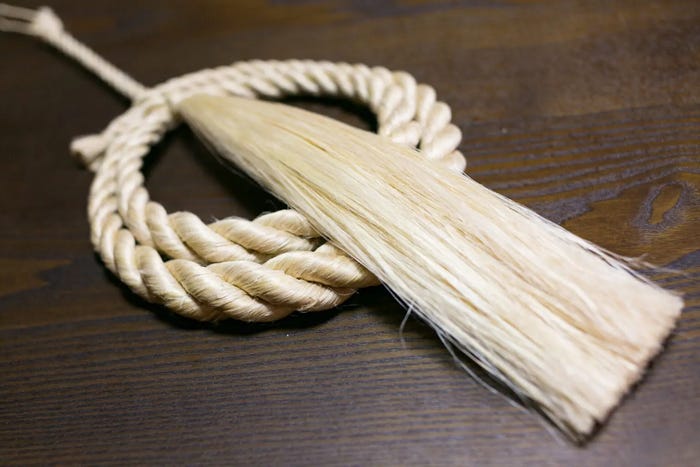
These are just a notes I got from today's visit to the museum and conversation with its owner, Takayasu-san. So much to research and to study. Where does resides, historically and ontologically, the holotropic power of the ropes? Here I use the term holotropic as coined by the psychiatrist Stanislav Grof, a state of mind oriented towards wholeness, in which our mind is susceptible for transformation [source]. I believe it describes the state of mind that we attain in a Shibari session. And I wonder what is the origin of such state and whether or not it has any root in Shintoism and hemp, a powerful plant that was used in other cultures around the world for similar purposes.
I felt the fever of new knowledge flowing through, many paths that open and also close. I want to study more Japanese. I want to read more, discover more. More than anything, I want to keep tying.
Thank you very much for your attention,
Pablo Shibari
If you enjoy this content, support my work by subscribing to my blog and sharing it with your network!
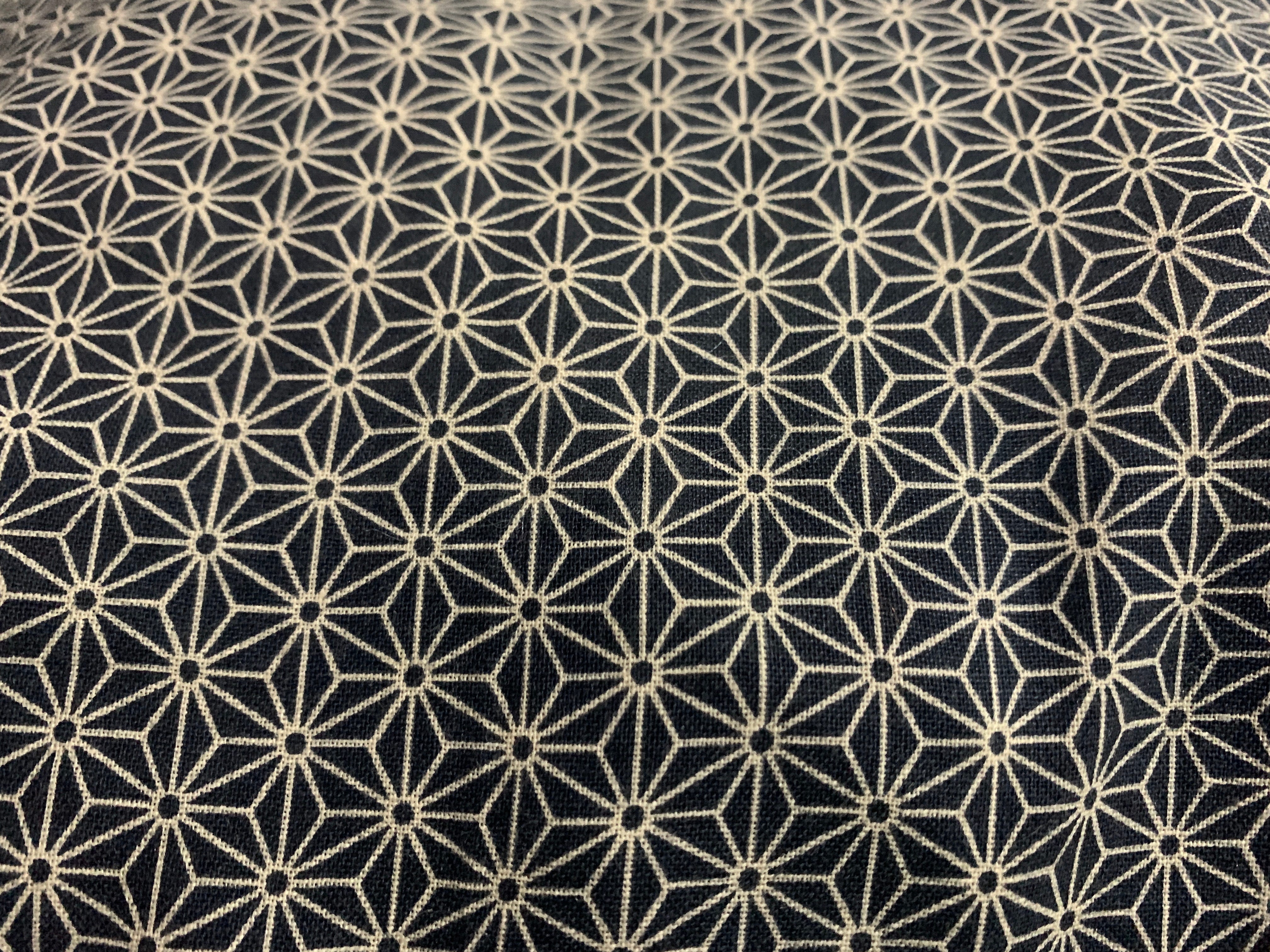
To finish, take a look at this beautiful hemp pattern. I use this fabric to carry my ropes.